A typical street motorcycle weighs roughly 15–25 times more than a typical bicycle, yet South Carolina law treats both riders as vehicle operators carrying identical duties on the roadway. That legal equivalence collides with physical reality in Columbia, where bike lanes along Rosewood Drive and Assembly Street sit inches from motorcycle traffic feeding onto Interstate 77.
The injuries land almost entirely on the cyclist, but South Carolina’s fault rules still divide blame the same way they would in any two-car wreck. That mismatch between physics and procedure shapes every decision that follows.
Who Answers For The Wreck On A Columbia Road
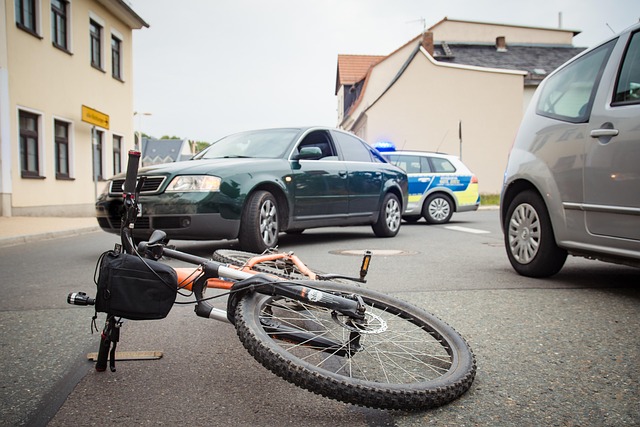
Columbia police complete an accident report whenever a collision produces injury, and the officer identifies both operators at the scene. Along routes like the Three Rivers Greenway crossing near the Gervais Street bridge, where cyclists and motorcyclists share tight lane space, officers note helmet use and skid marks before either rider leaves. That report becomes the first document an adjuster reads.
South Carolina law requires a motorcyclist to stop after any injury collision and exchange information with the other party. Witnesses disappear fast. A motorcyclist who leaves the Five Points area without stopping faces hit-and-run charges, and the cyclist’s own uninsured motorist coverage can still respond even when the motorcyclist is never identified.
South Carolina’s Fault Rule Decides Who Gets Paid
South Carolina law bars an injured cyclist from recovery once a jury assigns fifty-one percent of the fault to that cyclist. Below that line, the modified comparative negligence rule reduces the award by the cyclist’s own share of fault rather than erasing it. Every percentage point counts. A cyclist assigned twenty percent of the blame near Rosewood Drive still collects eighty percent of the damages.
Insurance Coverage Rarely Matches The Injury
South Carolina requires every motorcyclist to carry at least $25,000 in liability coverage per person. A cyclist struck by a motorcyclist carries no equivalent policy tied to the bike, since the state imposes no mandatory insurance requirement on bicycles. Coverage gaps show up fast once medical bills from Prisma Health Richland climb into six figures, and the motorcyclist’s policy caps out at the minimum.
Brent Stewart, an experienced Columbia motorcycle accident lawyer at Stewart Law Offices, breaks down the critical difference between insurance coverage types: “Two kinds of coverage address both situations, and they’re different. You get hit by a driver that does not have insurance; your policy has something called uninsured coverage. Uninsured coverage steps in and pays your damages”, explained Brent. “Underinsured is different. Underinsured is if you get hit by somebody and say you go to the hospital, you have a $100,000 hospital bill. If they only have $25,000 of insurance and they have no assets, you’re pretty much out $75,000. That’s why it’s really important to get underinsured coverage.”
Bicycle Rights Under South Carolina Traffic Law
A person riding a bicycle upon a roadway must be granted all of the rights and is subject to all of the duties applicable to the driver of a vehicle by this chapter. That status shapes both how fault gets assigned and what a motorcyclist owes a cyclist sharing the lane.
Safe Operating Distance
Section 56-5-3435 of the South Carolina Code requires a motorist, including a motorcyclist, to maintain a safe operating distance when passing a bicyclist, a rule promoted locally along the Three Rivers Greenway. A motorcyclist who passes within inches of a cyclist before a collision hands the injured rider strong evidence of negligence.
Lane Position And Right-Of-Way
A cyclist riding as far right as practical on Assembly Street still holds the right of way at marked intersections, the same as a motorcycle would. Adjusters sometimes argue a cyclist strayed from the shoulder, but the statute only requires riding near the right side when practicable.
Injuries Split Into Two Very Different Categories
Motorcyclists wear protective gear more often than cyclists, yet cyclists absorb the full force of a vehicle roughly ten times their weight. That imbalance produces two injury patterns that shape treatment and case value differently.
Road Rash And Fractures
Cyclists thrown from the bike commonly suffer road rash, broken collarbones, and fractured wrists from bracing against the pavement. Emergency crews transport many patients to Prisma Health Richland, the region’s trauma center, where imaging confirms fracture patterns that guide treatment.
Head And Spinal Trauma
A cyclist without a helmet faces a sharply higher risk of traumatic brain injury, and impact from a motorcycle on a road like Garners Ferry Road can produce spinal injuries that alter a person’s ability to work. Nationally, the motorcyclist fatality rate per vehicle miles traveled was almost 28 times the passenger-car occupant rate in 2023.
Filing A Claim Moves Through Richland County
South Carolina law gives an injured cyclist three years from the date of the crash to file a lawsuit, and that deadline shrinks to two years when a government vehicle shares fault. The clock starts immediately.
A lawsuit that proceeds past negotiation lands in the Richland County Courthouse on Main Street, where a judge oversees discovery and depositions before any trial. Medical records from every provider the cyclist saw travel through that process as the core evidence supporting the claimed damages.
Disclosure: I might earn commission from qualifying purchases. We use the commission to maintain the website, buy new products and create content for free, so thank you!